Canada Invited as EU Associate Member After Macron-Carney Meeting
Canada's invitation to become the EU's first associate member marks a significant shift in its international partnerships.
By Grace Whitfield · First published 20 Sept 2026
In brief
- French President Emmanuel Macron and Canadian Prime Minister Mark Carney met in Saint-Pierre-et-Miquelon to discuss closer cooperation.
- Canada was invited to become the European Union's first associate member, highlighting a shift in its global alliances.
- The leaders announced expanded collaboration in defense, economic policy, satellite infrastructure, and energy projects.
- Macron reaffirmed French sovereignty over Saint-Pierre-et-Miquelon amid tensions with the United States and recent comments from Donald Trump.
- Both countries are aligning more closely to counterbalance strained relations with the US and ongoing trade disputes.
Timeline · 6 moments
Carney addresses EU Parliament, draws mixed reactions
France24 ↗Macron announces visit to Saint-Pierre-et-Miquelon
Euronews ↗Carney travels to meet Macron on the islands
Global News ↗Macron and Carney hold talks, discuss closer ties
© Ludovic Marin, AFP ↗France and Canada announce joint work on satellite infrastructure
Global News ↗EU invites Canada to become first associate member
NYT World News ↗Update 21 Sept 2026, 3:23 am UTC
New coverage highlights that the European Union has invited Canada to become its first associate member, a major diplomatic development announced just after the Macron-Carney meeting. The leaders' talks are now more closely tied to Canada's pivot toward Europe and away from US dependence, with expanded cooperation in defense and the economy.
How it started
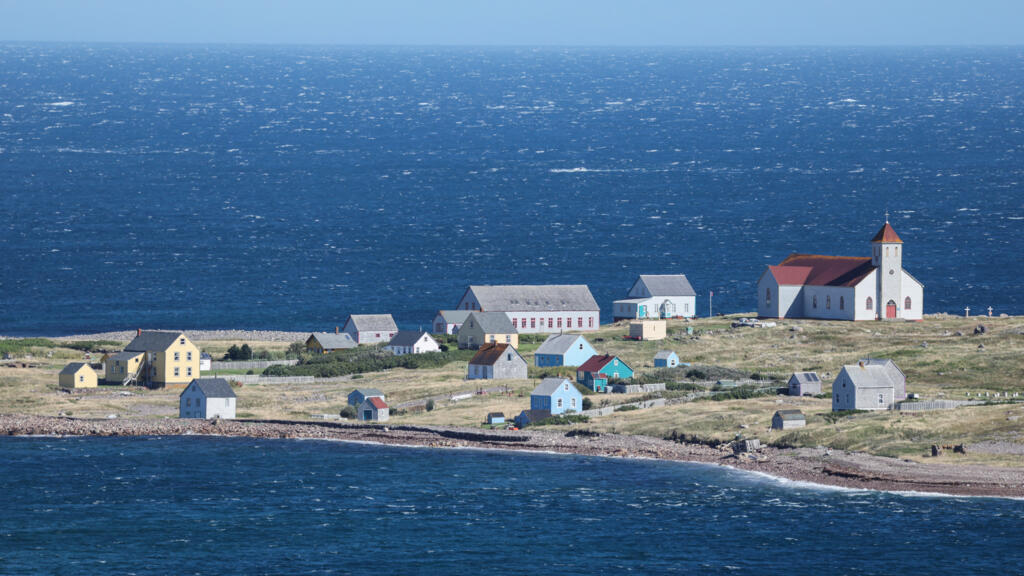
The relationship between France and Canada has grown more important in recent months, as both countries have responded to shifting global alliances and trade disputes involving the United States. The French territory of Saint-Pierre-et-Miquelon, a small archipelago off the coast of Newfoundland, became a focal point for these diplomatic efforts. In the weeks leading up to the meeting, Donald Trump made remarks and posted images suggesting American interest in the islands, raising concerns in both Paris and Ottawa.
French President Emmanuel Macron decided to make a symbolic visit to Saint-Pierre-et-Miquelon, highlighting its significance to France. Canadian Prime Minister Mark Carney, who had just addressed the EU Parliament, was invited to join Macron on the islands. The stage was set for a bilateral meeting that would underline both countries' shared interests and their intent to distance themselves from recent US positions.
How it unfolded
On September 17, Mark Carney addressed the EU Parliament, receiving strong support from centrist and far-left MEPs, while far-right members were critical of his speech. Shortly after, Macron announced his plans to travel to Saint-Pierre-et-Miquelon for the weekend, describing the territory as central to France's identity.
Macron arrived on the islands on September 19, marking the start of a high-profile visit. He immediately emphasized France's strategic claim to Saint-Pierre-et-Miquelon and highlighted recent investments in the area. Macron's statements were seen as a direct response to Donald Trump's recent comments and images regarding the territory.
On September 20, Macron welcomed Carney to the archipelago. The two leaders discussed ways to deepen cooperation between France and Canada, focusing on key sectors such as fishing, energy, and security. Both also addressed the importance of strengthening ties with Europe, especially as Canada faces trade tensions with the United States.
At a joint press conference, Macron and Carney announced plans to collaborate closely on projects including satellite infrastructure and economic initiatives. They presented the meeting as a new chapter in France-Canada relations, emphasizing their shared values and independence.
Where it stands
The visit concluded with both leaders reaffirming their commitment to deeper bilateral cooperation. Macron has made it clear that France considers Saint-Pierre-et-Miquelon an integral part of its territory, while Canada is moving to strengthen its partnerships with France and the broader European Union.
Concrete plans are now in place for joint work on satellite data infrastructure and expanded collaboration in fishing, energy, and security. The countries have presented a united front in response to US trade pressure and recent political rhetoric.
What to watch
Observers will be watching for follow-through on the announced joint projects, particularly in satellite infrastructure and energy. It remains to be seen how the US will respond to the visible alignment between France and Canada, especially as global trade tensions continue.
More in World
All →
Madrid Pensioner Evicted After 71 Years, Sparking Nationwide Protests Over Housing Crisis
The forced eviction of 87-year-old Maricarmen Abascal from her longtime Madrid home has triggered widespread protests across Spain and renewed debate about tenant rights and rising housing costs.
28 sources · over 5 days
Orange Order Parade Blocked by Thousands on Garvaghy Road
Protesters physically blocked the Orange Order parade in Portadown, leading to a tense standoff and the march being halted.
24 sources · over 7 days
South Korea Demands Apology After Ukraine Reveals POW Transfer Deal
South Korea has demanded an official apology from Ukraine after details emerged about the confidential transfer of North Korean prisoners of war, straining ties between the two countries.
11 sources · today