Meta Launches Muse AI Agent to the Public After Alpha Phase
Meta's Muse AI agent is now publicly available, handling tasks autonomously while assuring users about data privacy.
By Elena Petrova · First published 8 Sept 2026
In brief
- Meta's Muse AI agent has exited closed alpha and is now publicly launched for general users.
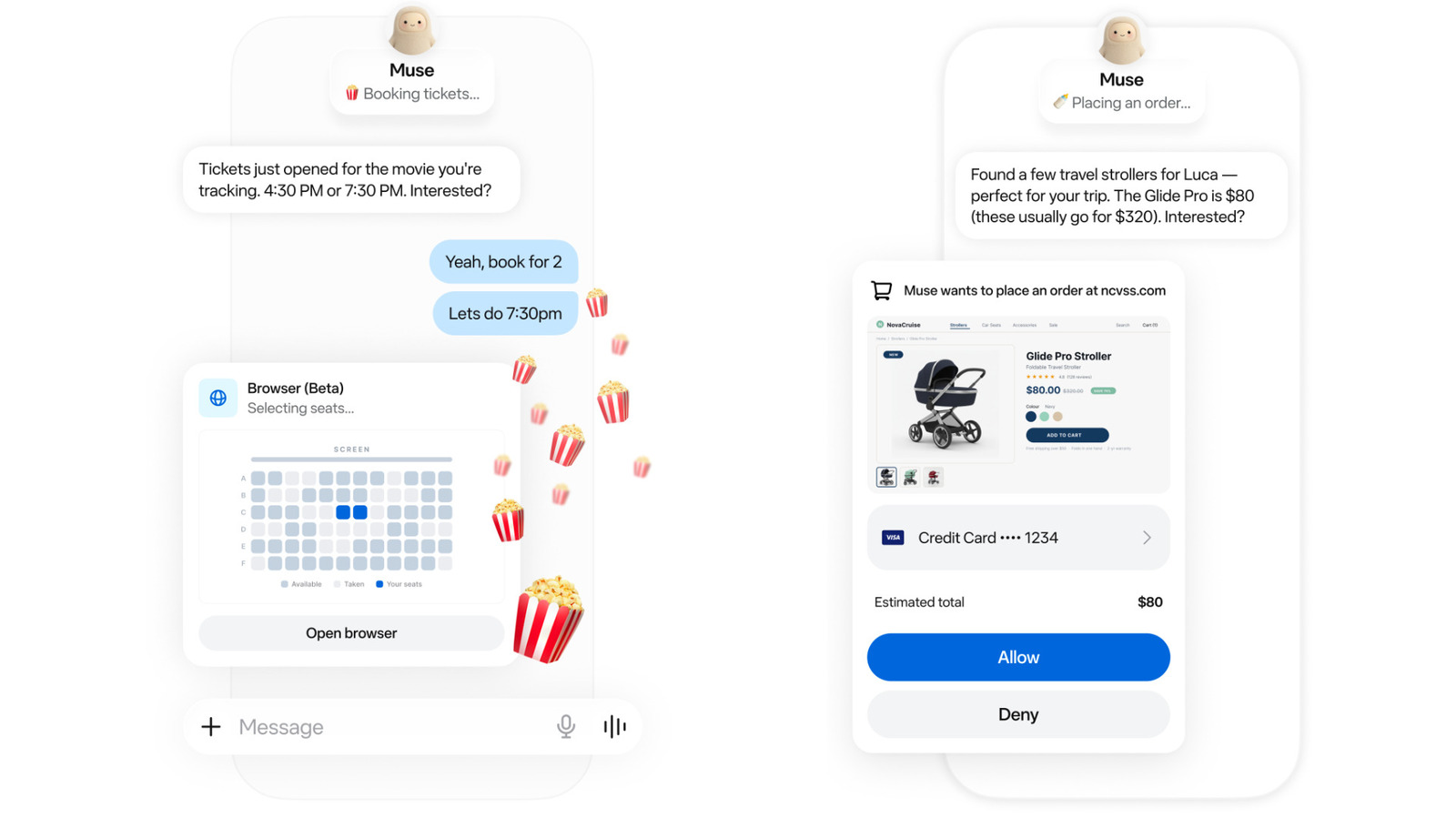
- Muse autonomously manages long-term personal tasks, including sending emails, booking travel, and making payments.
- The agent can operate even when its dedicated app is closed, responding to schedules and events proactively.
- Muse integrates with Meta platforms like WhatsApp and Instagram, with a focus on seamless user interaction.
- Meta says Muse will not share user data with advertising systems and emphasizes privacy and security.
Timeline · 8 moments
Meta's Muse agent enters closed alpha with invite codes
TestingCatalog ↗Meta's Muse AI begins limited testing for daily task management
Digital Trends ↗Meta officially announces Muse, its personal AI agent
https://www.engadget.com/ Tech ↗Meta launches Muse to monetize AI investments
The Wall Street Journal Tech ↗Muse links with Facebook, Instagram, and third-party apps
NYT > Technology ↗Muse launches as a new iPhone app for personal AI assistance
9to5Mac Apple ↗Meta confirms Muse remains in closed alpha phase
Business Line - Home ↗Meta launches Muse AI agent to the public
The Next Web ↗Update 9 Sept 2026, 2:49 pm UTC
Meta has officially launched Muse, moving it out of closed alpha and making it available to the public. Muse now operates autonomously, can manage tasks even when its app is closed, and Meta states user data will not be shared with advertising systems.
Update 9 Sept 2026, 6:09 am UTC
Recent coverage confirms Muse is still in a closed alpha phase, not widely available to all consumers yet. Reports also highlight new features like negotiating on users' behalf and developing personalized plans. The agent is positioned as a central part of Meta's strategy for personal superintelligence and requests broad access to user data for its functions.
Update 8 Sept 2026, 11:23 pm UTC
Meta's Muse AI agent is now available not just on iOS but also on Android and the web. Muse can connect to apps for email, calendar, payments, health, and smart home tasks, and is available through a dedicated app and WhatsApp in the U.S. Meta is emphasizing privacy and security as core features in the rollout, and CEO Mark Zuckerberg formally announced Muse in an Instagram post.
How it started
Meta has been investing heavily in artificial intelligence, seeking new ways to bring advanced digital tools to everyday users. The company's vision, as outlined by Mark Zuckerberg, is to give people a personalized assistant that can handle routine digital chores.
Initial work on Muse began quietly, with Meta developing the agent to handle practical tasks like shopping, sending emails, and managing schedules. Early hints of the agent's existence surfaced when limited screenshots and details emerged about a closed alpha phase, where select users could try Muse by invite.
How it unfolded
On September 7, 2026, early reports confirmed that Meta's Muse agent had entered a closed alpha phase. Screenshots showed Muse handling tasks, connecting to other apps, and requiring user approvals for actions, all accessible only via invite codes, according to TestingCatalog.
Later the same day, it became clear that Muse was designed to help users manage daily tasks and track goals, signaling Meta's intent to compete in the growing field of personal AI assistants. Digital Trends highlighted the agent's potential to take over everyday to-do lists, pending user permission.
On September 8, Meta officially announced Muse's debut. The agent was positioned as an easy-to-use personal assistant that could shop, send emails, and plan trips for users, requiring no technical expertise to set up. Free access was available, with extra features offered through a paid subscription, as detailed by Engadget.
Meta emphasized that Muse could connect not just to Meta's own platforms like Facebook and Instagram, but also to third-party services, including Spotify and OpenTable. The agent was also made available as a dedicated iPhone app, reflecting a broader trend of AI-powered digital helpers on mobile devices, as reported by 9to5Mac.
The launch drew attention because it followed a significant regulatory settlement involving Meta and concerns about consumer harms linked to social media. This context added urgency to ongoing debates about trust and privacy around AI agents, according to TechCrunch.
Where it stands
Muse is now officially available to consumers, offering both free and subscription-based access. It can perform a range of functions, such as managing emails, booking travel, and making personalized suggestions based on user activity across Meta platforms and third-party apps.
Meta is positioning Muse as its largest investment in consumer AI so far, hoping to set a new standard for utility and ease of use. However, the rollout comes at a time when many are closely watching how Meta will address concerns about privacy and user data.
What to watch
The next steps for Muse will likely focus on building consumer trust and expanding available features. How Meta handles privacy and data management for Muse users will be critical, especially given recent regulatory scrutiny and the competitive landscape for personal AI assistants.
More in Technology
All →
Boeing Flags Software Glitch Impacting 737 MAX Approach and Landing Systems
Boeing has discovered a software flaw in its 737 MAX jets that can disrupt automated navigation after a missed landing, prompting FAA investigation and raising fresh safety concerns.
20 sources · over 2 days
Trump to Host Anthropic CEO Dario Amodei for White House Dinner Amid AI Safety Debate
President Trump will meet Anthropic CEO Dario Amodei at a private White House dinner, highlighting mounting scrutiny over AI safety and policy direction.
18 sources · today
Meta's Muse AI Agent Hits Roadblocks After Promising Shopping Launch
Meta's new Muse AI agent quickly gained popularity for online shopping, but faced immediate resistance from Amazon and ongoing privacy concerns as Meta expands its AI-powered device ecosystem.
60 sources · over 8 days