Brent Oil Surges Past $100 Amid Escalating Middle East Conflict
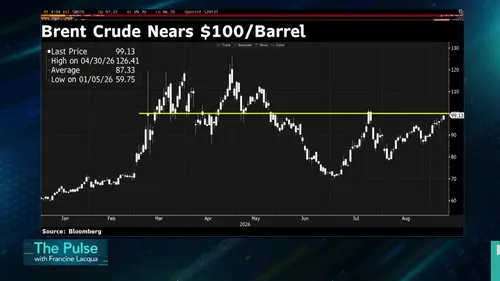
Brent crude has surpassed $100 a barrel for the first time since July as US-Iran hostilities disrupt supply.
By Elena Petrova · First published 8 Sept 2026
In brief
- Brent crude oil has now clearly surpassed $100 per barrel, reaching this level for the first time since July.
- Escalating US-Iran conflict and attacks on vessels in the Strait of Hormuz are fueling concerns about global oil supply.
- Analysts warn that if hostilities continue, oil prices could climb further, potentially reaching $120 per barrel.
- India faces rising inflation and economic strain as its crude oil import basket price exceeds $100 per barrel.
- Ongoing instability in the Middle East and partial blockages in key shipping routes keep traders on alert for supply shocks.
Timeline · 10 moments
Indian rupee rises slightly in early trade
The Hindu ↗Rupee falls as oil prices climb during the day
Business Line - Home ↗Attacks halt Saudi energy operations, oil nears $100
Bloomberg ↗Oil prices surge after Houthi attacks on Saudi facilities
Breaking News on Seeking Alpha Business & Economy ↗Brent crude hits six-week high at $100 for India
Times of India Top Stories ↗Iran warns of possible retaliation, supply fears rise
Mehr News (English) ↗Explosions reported near Iran's Kharg Island
Breaking News on Seeking Alpha Business & Economy ↗US strikes Iranian tankers, Brent nears $100
Bloomberg ↗India's crude import basket breaches $100 mark
Business Line - Home ↗Brent crude tops $100 for first time since July
Bloomberg ↗Update 9 Sept 2026, 8:19 am UTC
Brent crude has now definitively crossed the $100 per barrel mark, reaching this level for the first time since July. The escalation of conflict in the Middle East, particularly attacks involving the US and Iran, continues to drive volatility and fears of a global supply crunch.
Update 9 Sept 2026, 4:59 am UTC
Brent crude is now pushing closer to $100 per barrel, with several outlets reporting it has breached this mark in some markets. The escalation of conflict between Iran and the US, including strikes near Iran's Kharg Island and attacks on US military assets, has further increased supply fears. Analysts now warn that prices could rise as high as $120 if disruptions persist. India's crude oil import basket has also crossed $100 per barrel, the highest since June.
How it started
Oil prices began creeping higher as tensions escalated in the Middle East, with particular focus on Saudi Arabia and Iran. The initial trigger was a series of attacks on Saudi energy facilities, which disrupted operations and raised concerns about the security of key oil infrastructure. These attacks, reportedly carried out by Yemen's Houthi group, heightened fears that the conflict might affect broader supply routes.
As the situation developed, global markets started reacting. Early trading saw the Indian rupee strengthen slightly against the U.S. dollar, partly due to strong dollar inflows. However, the mounting threat to oil supplies quickly became the dominant concern for traders.
How it unfolded
On September 7, the Indian rupee opened stronger at 94.39 against the U.S. dollar, but by the end of the day, it had fallen to 94.50 as oil prices started to surge. By September 8, attacks on Saudi Arabia's southern energy facilities had halted operations at several sites, pushing Brent crude oil close to the $100 mark.
The attacks led to immediate concerns over global supply, especially as the Strait of Hormuz, a crucial shipping route, faced constraints. Major oil traders estimated that flows through the strait had been affected, and Gulf producers began seeking alternative shipping routes to maintain exports.
Iran issued warnings about possible retaliation against U.S. actions, adding another layer of uncertainty. Reports indicated that WTI crude also climbed, reaching over $92 per barrel. Meanwhile, India's crude import benchmark crossed $100, the highest in six weeks, contributing to further pressure on the rupee.
Throughout September 8, the rupee suffered its sharpest single-day fall in more than a month, dropping to 94.84 per dollar by the close. Global benchmarks for oil, including Brent, hovered just under $100, with some reports noting intraday highs above $99. This surge in oil prices prompted concerns about rising inflation, particularly for large importers like India.
Where it stands
Brent crude oil is now trading just below the $100 per barrel mark, the highest level seen since late July. The Indian rupee has weakened significantly due to the increased cost of oil imports, closing at 94.84 per U.S. dollar. Markets remain volatile as traders watch for further disruptions and potential escalation in the Middle East.
The situation has left India facing the prospect of a higher oil import bill, which could fuel inflation and put additional strain on the country's economy. Analysts expect oil prices to remain elevated as long as supply risks persist and geopolitical tensions remain unresolved.
What to watch
Attention is now focused on whether further attacks or retaliation will disrupt oil supplies from Saudi Arabia or the broader Gulf region. The next few days will be crucial for both oil prices and the Indian rupee, as any new developments could quickly impact global markets and economic stability in major importing countries.
More in Business
All →
US and China Reveal Product Lists for $30 Billion Tariff Reduction Deal
The US and China have agreed to reduce tariffs on billions in goods, signaling progress in trade talks after a major summit between their leaders.
9 sources · today
India Sets New UPI Merchant Charges, Small Retailers Plan Protests
India's decision to introduce a 0.4 percent merchant fee for large UPI transactions has sparked debate over its impact on small businesses and digital payments, with protests and legal challenges emerging.
8 sources · over 6 days
Nationwide Bank Strike Deferred After Last-Minute Talks With Unions
The three-day nationwide bank strike set for September 28-30 has been called off after successful negotiations.
12 sources · over 7 days