Scientists Replace Mouse Brain Cortex With Human Neurons in Landmark Study
Researchers have successfully integrated human neurons into mouse brains, creating powerful new tools for studying brain diseases but raising pressing ethical questions about animal experimentation.
By Grace Whitfield · First published 16 Sept 2026
In brief
- Stanford researchers transplanted lab-grown human brain organoids into mice with reduced native brain tissue.
- The human brain cells integrated successfully, forming functioning neural circuits within the mouse brains.
- These hybrid mice survived and showed brain activity, offering new ways to study human neurodevelopmental disorders.
- The approach may lead to advances in understanding and treating conditions like cerebral palsy and epilepsy.
- The results have intensified ethical debates about animal welfare and the implications of human-like brain structures in animals.
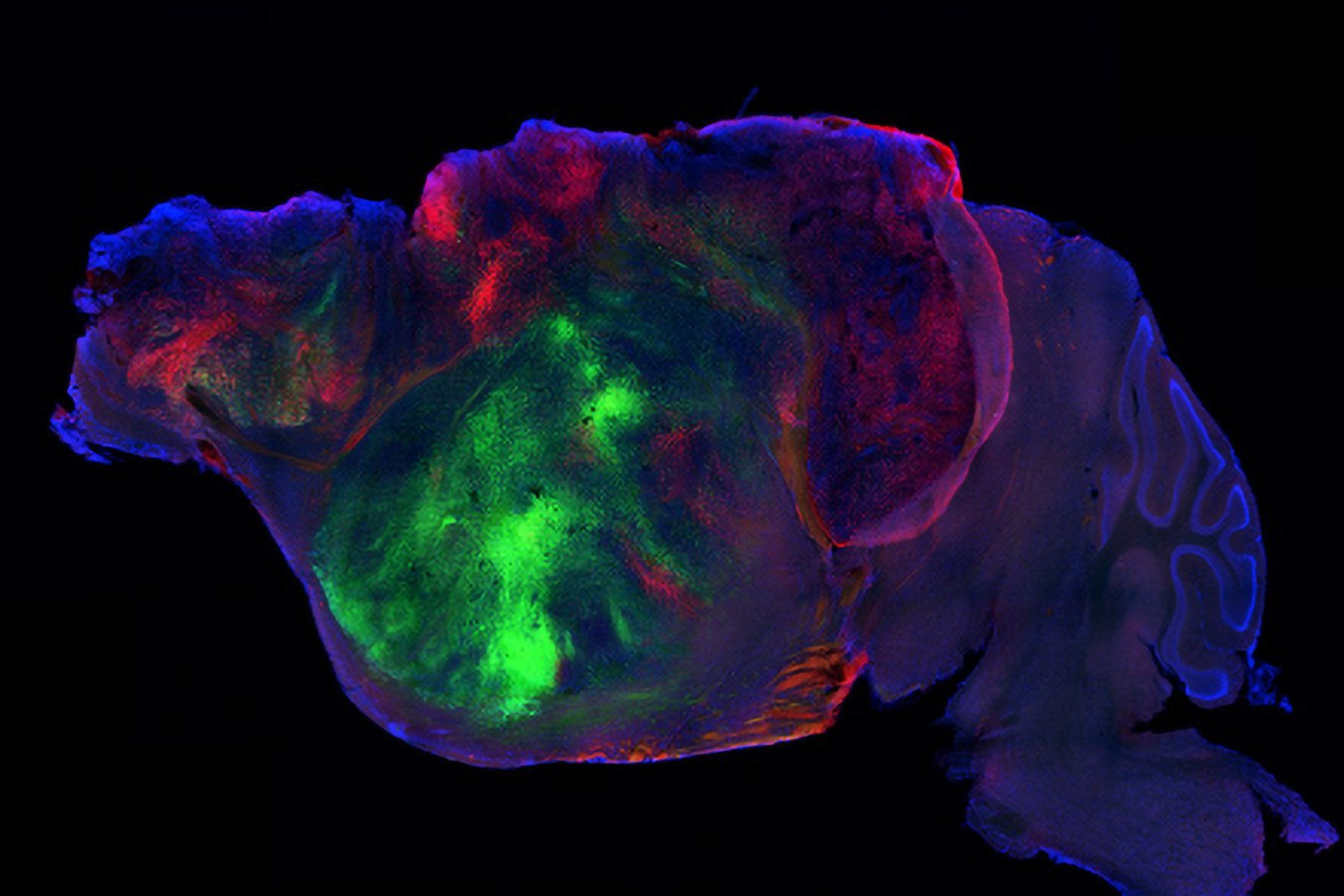
Timeline · 5 moments
Human neurons flourish after being implanted in mouse brains
Science Magazine ↗Scientists grow organoids to fill mouse brains missing cortex
STAT News ↗Mice with human cortex cells tracked in behavioral experiments
MIT Technology Review ↗Brain organoids restore some functions in mice with reduced cortex
New Scientist ↗Stanford team credited with breakthrough mouse-brain study
New York Post ↗Update 18 Sept 2026, 6:00 pm UTC
Stanford scientists have now been named as the team behind the experiment, and coverage confirms that human brain organoids formed functioning neural circuits in the mouse brain. The integration of human neurons is now described as creating human neuron-rich tissue, clarifying the extent of the transplant.
How it started
For years, neuroscientists have sought better models to study human brain development and disease. Traditional animal models do not fully replicate the complexity of the human brain, limiting their usefulness for studying certain disorders.
Advances in stem cell research enabled scientists to grow cerebral organoids, which are miniature, three-dimensional clusters of brain-like tissue, from human stem cells. These organoids mimic some features of human brain development and have become valuable tools in the lab.
The next step was to see if these organoids could be integrated into living brains, providing a more accurate model for how human neurons function in real neural circuits.
How it unfolded
On September 16, 2026, several outlets reported that researchers had successfully replaced much of the mouse cortex with human brain organoids. The mice had part of their brain tissue removed, creating space for the human-derived organoids to be implanted.
According to Science Magazine, the human neurons not only survived but also flourished, establishing connections within the mouse brain. STAT News explained that these mice had 'half a brain' before the human tissue was introduced, marking a major technical achievement.
MIT Technology Review described how researchers used sophisticated tracking technology to monitor the behavior of these mice, noting changes in movement and activity. Live Science and New Scientist both highlighted that the implanted human organoids restored some cognitive abilities in the mice, suggesting real integration with the host brain.
The BBC reported that the work was carried out at Stanford University, where mice were genetically altered to better accept and function with the implanted human cells. This approach opens new avenues for studying diseases that affect the human cortex.
Where it stands
Researchers now have a new model for studying human brain disorders in a living system. Early results show that human neurons can survive, grow, and even restore some functions in the mouse brain.
At the same time, the work has generated significant ethical debate. Experts are discussing how the presence of human brain cells in animals might affect their cognition and welfare, and whether new guidelines are needed for such experiments.
What to watch
Scientists will continue to monitor these mice to see how human cells integrate over time and whether they develop unique behaviors. The research community is also watching for regulatory and ethical responses, as the boundary between animal and human brain research is being tested in new ways.
More in Science
All →
Lian Yunzhi Sets Rubik's Cube Record With 4.52 Second Average
Six-year-old Lian Yunzhi set the women's 3x3 Rubik's Cube world record with a 4.52 second average at a Wuhan competition.
20 sources · over 4 days
Fire Amoeba Survives at 158°F, Breaking Heat Tolerance Record
Scientists confirm a California amoeba thrives at 158°F, raising the heat survival record for complex life.
11 sources · over 2 days
Bolivia's Tilcayo Wild Cat Confirmed as 3-Pound Distinct Species
DNA analysis shows the newly discovered tilcayo wild cat is smaller than a domestic cat and genetically unique.
39 sources · over 6 days